Happy Glass

Happy Glass: A Simple Puzzle Idea With Real Depth
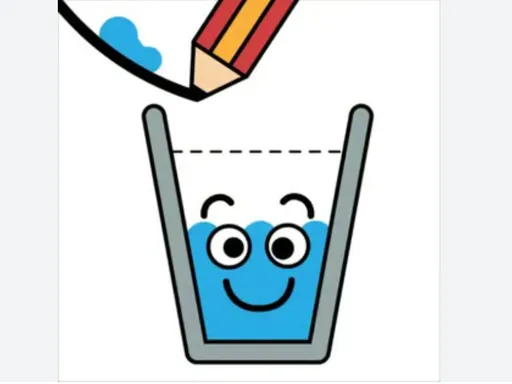
Happy Glass is a physics drawing puzzle with a clear objective: fill an empty cup with enough water to make it smile. You draw lines, watch water move, and adjust when something spills or misses the rim. The rules are easy to understand in seconds, yet small choices in angle and placement can completely change the result.
This is why the game works so well in short sessions. A level can be solved quickly, but cleaner solutions often take experimentation. The challenge is not complicated controls. It is the relationship between gravity, line shape, and timing.
Happy Glass also stays approachable because feedback is immediate. When a run fails, you usually see why right away. The stream might split, bounce off the cup edge, or leak through a gap. That visible cause and effect keeps the game engaging instead of confusing.
How the Gameplay Loop Works
Level Structure
Most stages include three core parts: a water source, a target cup, and obstacles between them. You press and drag to draw one or more solid lines. Those lines can become ramps, guards, bridges, or supports. If enough water reaches the fill mark, the level is complete.
Many versions reward efficient drawing. Using less ink or fewer strokes usually helps your star result. This creates a second layer of strategy: not only solving the puzzle, but solving it with restraint.
Why Retries Feel Good
Levels are short, so retries are fast. You can test an idea, fail, and retry within seconds. Because the physics response is visible, each attempt teaches something specific. One endpoint might be too high. A corner might be too sharp. A tiny blocker might be missing. Quick iteration is a big part of the fun.
Playing in Browser on This Site
Browser play is convenient because it removes setup friction. You can load a level and start drawing immediately without app installation. On desktop, mouse input is precise for narrow ramps and careful line placement. On mobile, touch input feels natural since the core action is drawing with a finger.
If you are playing Happy Glass in a browser tab, treat your first attempt as a test pass. Watch where the first drops travel, then refine with small edits. This approach is usually stronger than trying to force a perfect final shape on attempt one.
Fullscreen mode can also improve control, especially on dense levels where endpoints must be placed accurately.
Controls and Practical Strategy
Basic Input
Desktop: click, hold, and drag to draw, then release to place the line. Mobile: tap and drag with one finger. Interface details can vary by build, but the drawing logic remains the same.
Start Small
Oversized drawings often create extra collisions and unpredictable splashes. Begin with compact lines. A short slope near the source can outperform a giant wall across the level.
Plan the First Drop
The earliest contact point often decides the entire run. Before drawing, picture where the stream should land first. If the opening flow enters the correct lane, the rest is easier to control.
Protect Without Blocking the Cup
It is common to over-defend the cup and accidentally block entry. Shield the sides only when needed, and keep the top path open so water can settle cleanly.
Change One Variable at a Time
When a setup almost works, avoid total redesign. Move one endpoint, shorten one segment, or soften one angle. Isolated changes help you learn faster and prevent overcorrection.
Common Puzzle Patterns
Gap Crossing
You create a bridge or diagonal route so water can cross open space. Stable angle matters more than line length.
Leak Control
Some stages only need a tiny stopper to prevent escape. A small line in the right location can be better than a complex funnel.
Cup Stabilization
When the cup can tilt or move, support becomes priority. Build stability first, then guide the stream second.
Split Stream Recovery
If water splits into weak branches, commit to saving one path cleanly. Trying to rescue every droplet often causes chaos.
Background and Lasting Appeal
Happy Glass rose during the late 2010s mobile puzzle wave, where simple concepts and fast rounds helped games spread quickly. Public app listings and game database records generally associate the title with Lion Studios publishing and a 2018 release window, with Game5mobile commonly listed among developers in archived references.
Its long-term appeal comes from balancing comfort and challenge. The visual goal is friendly and immediate, but puzzle outcomes still reward careful thinking. Two players can solve one stage in different ways, so the experience feels creative rather than rigid.
Mistakes New Players Make
Drawing Too Much, Too Soon
Fix: Place one useful line first, then add only what replay evidence proves necessary.
Ignoring Gravity
Fix: Favor gentle downward guidance. If the route fights gravity, the stream usually breaks apart.
Resetting a Nearly Correct Plan
Fix: Preserve the part that works and tune one weak point at a time.
Frequently Asked Questions
Is Happy Glass free online?
Most browser versions are free to start and run directly in modern web browsers.
What genre is Happy Glass?
It is a physics-based puzzle drawing game focused on guiding water into a cup efficiently.
Who made Happy Glass?
Public listings often credit Lion Studios as publisher, and game archives commonly reference Game5mobile in development records.
Do I need fast reflexes?
Not usually. Planning and line placement matter more than reaction speed.
Why do shorter drawings score better?
Efficient lines reduce accidental collisions and keep the stream cleaner, which often improves star ratings.
How can I improve quickly?
Watch the first two seconds of each attempt, find one failure point, and change only that point on the next run.
Final Play Advice
When you are stuck, step back for ten seconds and simplify. Ask one question: what is the minimum shape that guides the first flow correctly? In Happy Glass, elegant solutions are usually short, stable, and easy to read. If a level feels impossible, it often means the drawing is overbuilt rather than underbuilt. Keep your geometry clean, test quickly, and let gravity do most of the work. That habit turns difficult stages into repeatable wins.
Comments
Loading comments…