Fruit Ninja



What Is Fruit Ninja?
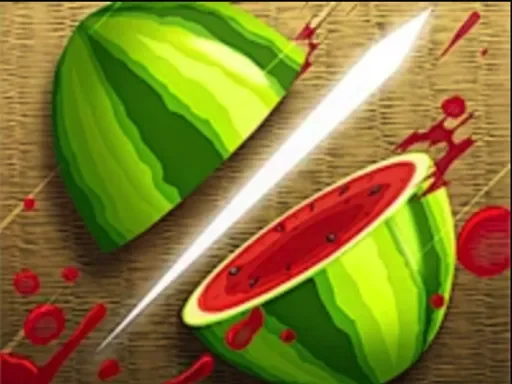
Fruit Ninja is an arcade slicing game where you cut flying fruit, dodge bombs, and build combos through clean, well-timed swipes in short browser sessions. It explains itself in a second and then keeps revealing better habits the longer you play. The appeal is obvious even before you learn the scoring rules. Slicing a clean arc through a cluster of watermelon, pineapple, and banana produces instant feedback, and that feedback is satisfying enough to carry the whole experience.
The deeper layer comes from risk management. A good run is not about moving as much as possible. It is about reading a lane of fruit, choosing whether the grouping deserves one stroke or two, and keeping enough control to avoid the bombs that can end a round immediately. That balance between speed and discipline is why the game still works so well in a browser tab.
What a Strong Round Actually Looks Like
Classic mode is pressure through survival
In Classic mode, every missed fruit costs a life, and hitting a bomb ends the run at once. That structure makes the game feel calm for a moment and then suddenly intense when multiple items launch together. The goal is simple, but the right rhythm matters. You want controlled swipes that clear grouped fruit without drawing a chaotic path across the whole screen. Small, readable motions leave room to react when a bomb appears near the center of the arc.
Because the run can end instantly, Classic rewards consistency more than aggression. If three fruits rise together, one curved slice is better than three separate panic movements. If a lone fruit appears near a bomb, it is often smarter to give up the point.
Arcade and Zen reward a different mindset
Halfbrick's official mode descriptions make the contrast clear: Arcade is built around a short timer, score bursts, and special bananas, while Zen removes bombs and lets you focus on efficient slicing under time pressure. In Arcade, combos and bonus fruit matter more because the clock is always shrinking. In Zen, the challenge becomes pace and pattern reading, since there is no bomb threat to break your flow. Browser players may not always see every modern platform mode, but understanding these design differences helps you read whatever version is in front of you.
Playing in Browser on This Site
The browser version is best treated as a precision score chase rather than a long-form campaign. Load the game, settle your cursor or finger, and use the first few launches to calibrate your swipe length. Desktop players usually benefit from shorter mouse strokes than they expect.
One useful habit is to stay near the middle of the play area and react outward instead of starting every motion from an edge. That keeps your recovery time low after each slice. The same core advice appears across public browser guides and fan pages for Fruit Ninja: combos come from anticipation, not frantic movement. When several fruit pieces are about to cross, wait half a beat, then cut through the shared path instead of chasing them one by one.
If the embedded game offers fullscreen, use it when you want higher scores. The extra space makes launch angles easier to read and reduces accidental over-swiping. It also helps you spot bombs earlier, especially when a dark bomb overlaps with deep-colored fruit.
Controls That Raise Your Score
Swipe through trajectories, not objects
New players often aim at the visible fruit sprite itself. Better players aim through the route the fruit is about to travel. This changes everything. Instead of reacting late, you are placing your stroke where the fruit will meet it. That is how clean three-fruit and four-fruit combos happen consistently.
Keep your cuts compact
Long diagonal slashes look dramatic, but they create unnecessary exposure to bombs. Short arcs are safer because they begin and end inside a smaller zone, which means fewer surprise collisions. Compact motion also makes recovery easier when the next wave launches from the opposite side.
Use bombs as spacing markers
Do not think of bombs only as hazards. They also tell you where not to swing. When a bomb rises inside a cluster, let it define the empty lane you should preserve. This reframing helps you avoid the classic mistake of seeing fruit first and bomb second.
Know when to abandon a point
Fruit Ninja looks like a game of total completion, but strong scores often come from selective misses. Giving up one awkward fruit is far cheaper than ending a whole run. If a piece launches late, crosses near a bomb, and offers no combo opportunity, letting it fall is often the correct play.
Where Most Runs Fall Apart
The most common failure is overcommitting after a good opening. A player lands two fast combos, feels ahead of the pace, and begins swinging across the entire board. The hand returns late, the next bomb arrives inside the follow-through, and the round is over.
Another frequent issue is reading all fruit as equal. They are not equal in context. A tightly packed group is high value because it can become a combo. A single stray fruit near a bomb is low value because the risk is disproportionate. Training yourself to recognize that difference will improve results more quickly than raw reaction drills.
Beginners also forget that the launch pattern creates rhythm. Fruit tends to rise in waves, not as random noise. Once you stop chasing every item and start reading the wave, the game slows down mentally even though the screen still looks busy.
Why the Game Became a Modern Casual Classic
Fruit Ninja was created by Halfbrick Studios and first released on mobile in April 2010, then spread quickly as touchscreen play became mainstream. That timing mattered. The concept used the strengths of early smartphones perfectly: direct finger input, short sessions, and an instantly legible goal. Later releases expanded the formula with more blades, dojos, event structures, and different scoring modes, but the original fantasy remained the same. You feel like every successful swipe is both simple and skillful.
The game also endured because its rules are readable from a distance. Someone watching for ten seconds understands what is happening. Someone playing for ten minutes starts noticing technique. That balance is exactly why it continues to work on phones, tablets, and browser embeds years after launch.
Frequently Asked Questions
Is Fruit Ninja easy to play in a browser?
Yes. The browser format suits the game well because the rules are simple and each round begins immediately with basic swipe input.
What is the main objective in Fruit Ninja?
The objective is to slice as much fruit as possible while avoiding bombs and, in some modes, preventing fruit from dropping unsliced.
Which mode is best for beginners?
Classic is the clearest place to learn because it teaches bomb awareness and disciplined swiping, while Zen is also helpful for practicing combos without bomb pressure.
Why do I hit bombs even when I see them?
Most bomb hits happen during the follow-through of a long swipe. Shorter, more controlled arcs give you better stopping points and reduce accidental contact.
Do combos matter more than single slices?
Usually yes, especially in timed modes. One clean combo builds score faster than several separate cuts and often exposes you to less bomb risk.
Who made Fruit Ninja?
Fruit Ninja was created by Halfbrick Studios, the Australian developer that introduced the game during the 2010 mobile gaming boom.
How can I improve quickly?
Focus on three habits: wait for grouped fruit, keep swipes compact, and willingly skip low-value slices that pass too close to bombs.
Comments
Loading comments…